
A make-up air (MUA) unit is an HVAC device that brings in outdoor air to replace indoor air removed from a building by exhaust fans, kitchen hoods, paint booths, or other ventilation equipment. In simple terms, if air is pulled out of a building, new air must be brought back in. Without enough replacement air, the building can go into negative pressure which may cause drafts, poor indoor air quality, reduced equipment performance, and even external doors that are harder to open.
Many make-up air units also warm the incoming air before it enters the building so the space stays comfortable in cold weather. There are two common ways this is done. With a direct-fired unit, the burner heats the air directly which makes the system efficient and fast. With an indirect-fired unit, the burner heats a metal heat exchanger and the air is warmed on the other side keeping combustion by-products separate from the airstream. For someone new to HVAC, the easiest way to think about make-up air is it helps a building “breathe” properly by replacing exhausted air with fresh, controlled air.
What is a Make-Up Air Unit?
A make-up air unit introduces fresh outdoor air to replace indoor air removed by ventilation which maintains building pressure, indoor air quality, and comfort.
Why is Make-Up Air Important?
Tightly sealed, energy-efficient buildings need make-up air to avoid negative pressure. Without it, problems like poor air quality, drafts, lower system performance, and trouble opening exterior doors can occur.
Modern buildings use ventilation to remove contaminants; make-up air units are essential to replenish this air.
How do Make-Up Air Units Work?
Make-up air units heat incoming outdoor air before delivering it to the building. The two most common heating methods are indirect-fired and direct-fired systems.
Indirect-Fired: Indirect-fired make-up air units use a burner and heat exchanger to warm incoming air while keeping combustion by-products separate from the airstream.
Key Characteristics:
- No added contaminants or humidity in air supply
- Typical turndown ratio of 10:1
- Approximate efficiencies up to 80%
Direct-Fired: Direct-fired make-up air units heat outdoor air by introducing combustion by-products directly into the airstream and are commonly used in high-airflow commercial and industrial applications. The combustion process is clean enough to heat occupied spaces.
Key Characteristics:
- Significantly lower startup and operational costs compared to indirect-fired units
- Immediate heat
- Higher turndown ratios of up to 30:1
- Can be higher if emissions are not a concern
- Approximate efficiencies up to 92%
What are Direct-Fired Make-Up Air Unit Applications?
Original Equipment Manufacturers (OEMs): Direct-fired make-up air is a strong fit for OEM-built equipment that needs high airflow, fast warm-up, wide modulation, and an efficient way to offset exhausted air in commercial and industrial spaces. Below are common applications served by Midco’s HMA line.
- Agriculture: Ventilation and tempering air for barns, poultry houses, greenhouses, and other ag facilities where large volumes of outside air must be introduced and heated quickly.
- General: Replacing air exhausted by kitchen hoods, warehouse ventilation, restrooms, and process exhaust to prevent negative building pressure and improve comfort.
- Process heating: Supplying heated air as part of a manufacturing process where consistent airflow and controllable temperature rise are required.
- Batch ovens: Providing combustion-heated air for oven make-up/ventilation needs, especially where rapid recovery and turndown help maintain stable setpoints across cycles.
- Spray booths: Supplying temperature-controlled make-up air for paint spray booths to support proper paint finish quality and drying, often with tight airflow requirements and safety-focused controls.
For OEMs, these applications often require flexible burner footprints, multiple gas inlet options, and controls that support safe light-off and stable modulation across changing airflow and temperature demands.
Design Considerations for Make-Up Air Units
Make-up air units generally consist of a sheet metal shell with an inlet air opening and an outlet air duct. If the unit is installed on a rooftop, it will often have an inlet hood and discharge the air downward into the building. Most units will have screens to prevent any debris from entering the unit and filters to clean the air. There are important considerations regarding the placement of the burner in the air handler, as well as choices that affect airflow and overall burner performance.
Burner Profile
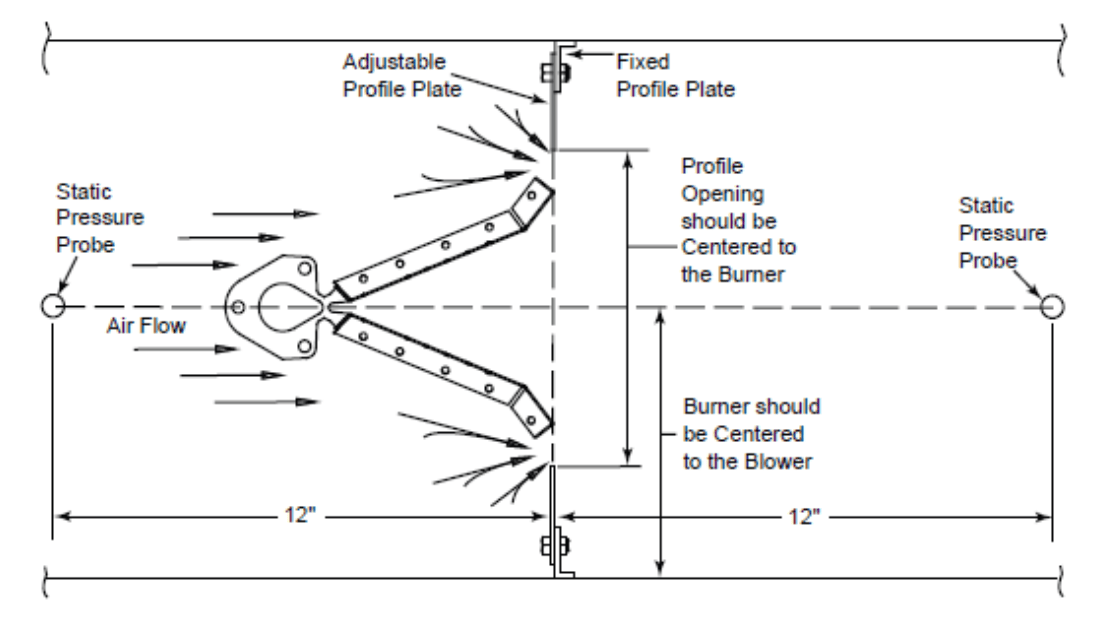 |
| Figure 1 – Cross Sectional Side View of Typical Direct-Fire Heated Make-Up Air Duct Description: The HMA burner is located in the make-up airstream. The profile opening is customized to the burner and the duct flow characteristics to achieve the required combustion performance. |
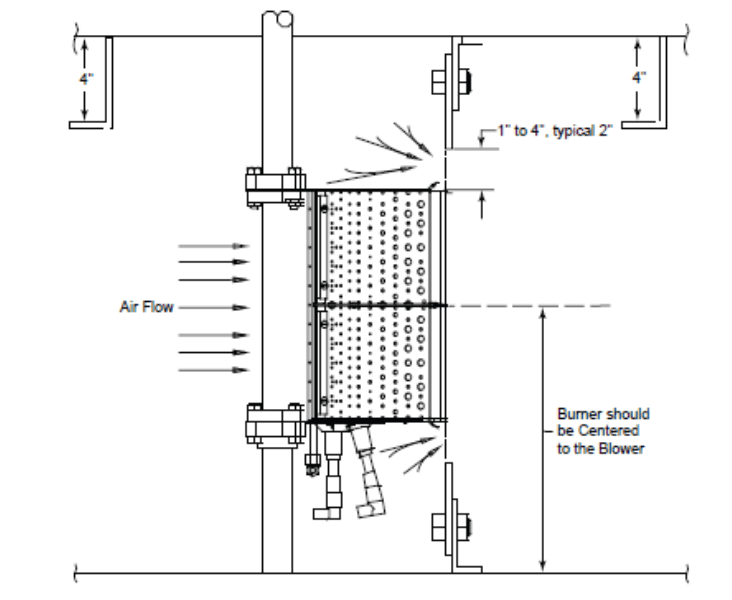 |
| Figure 2 – Top View of Typical Direct-Fire Heated Make-Up Air Duct Description: View of the HMA burner from the top. |
Blower Placement – Pull Through: Pull through configurations have the blower after the burner which allows the blower to only work with heated, less dense air allowing for higher efficiency. This configuration also helps mix the air through the blower preventing possible stratification. This is a common configuration in rooftop HVAC units.
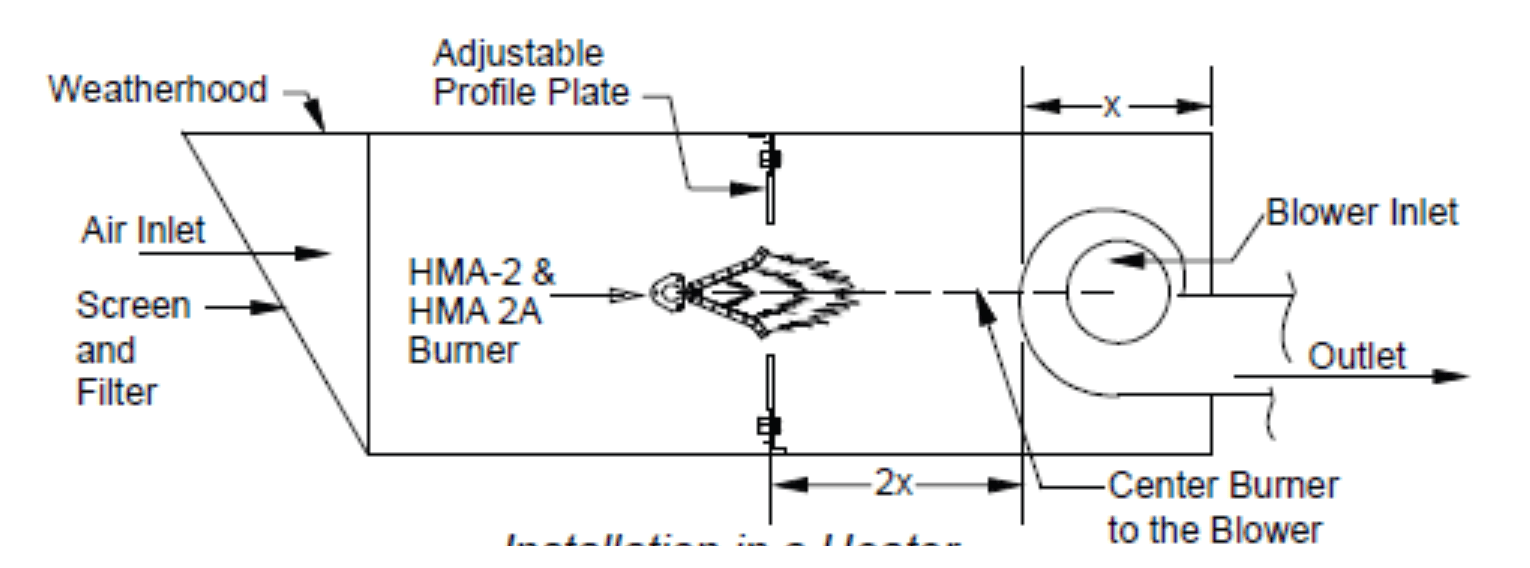 |
| Figure 3 – Midco HMA Burner in a Pull Through Unit Description: When the burner precedes the blower, it is known as a pull through unit. This is common for rooftop makeup air units since it helps mix the air. |
Blower Placement – Push Through: Push through configurations have the outlet of the blower before the burner which allows for sufficient combustion. However, this may require a mixing plenum to ensure minimum air stratification. This is a common configuration in process heating applications such as paint spray booths.
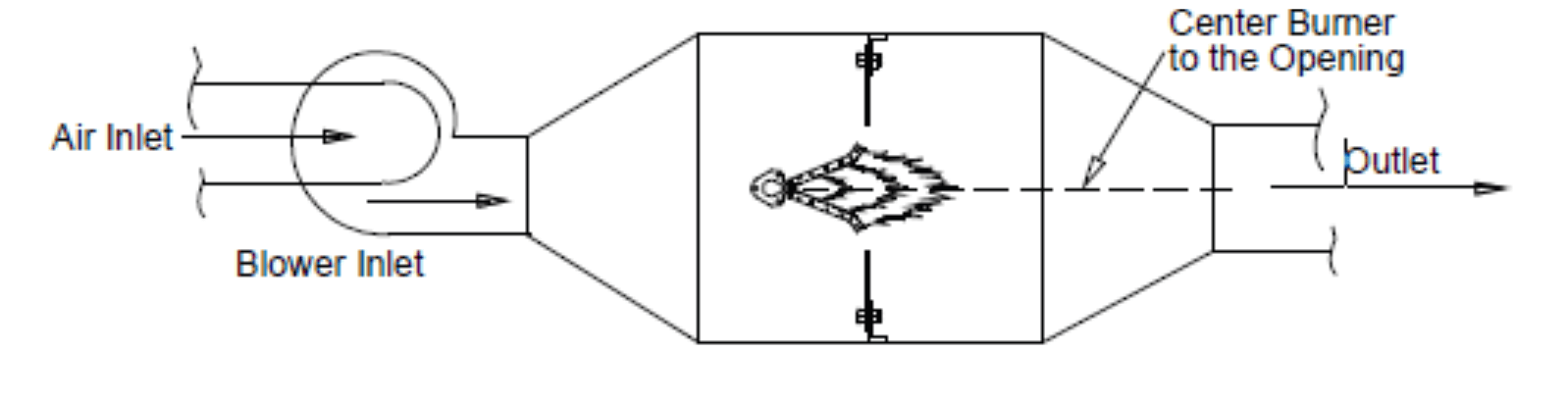 |
| Figure 4 – Midco HMA Burner in a Push Through Unit Description: When the burner follows the blower, it is known as a push through unit. This is common for process heating like paint booths. |
Why Choose Midco’s HMA Line of Burners?
Midco’s HMA (Heated Make-Up Air) product line provides versatile direct-fired heated make-up air solutions. Our modular burners accommodate various configurations and BTU needs.
Customization Options: HMA burners provide up to 750,000 BTU/hr per linear foot. Assemblies can be customized to suit your requirements and space, including compact cabinets and atypical duct dimensions. Burners can range from six inches to dozens of feet in length. Figure 5 shows examples of the range of customization offerings.
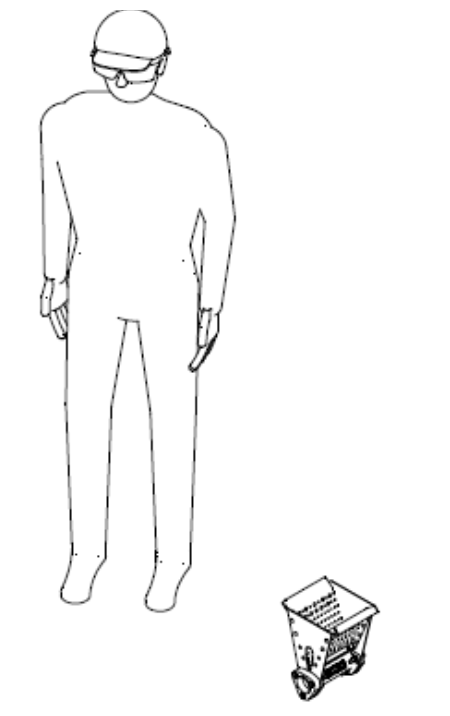 |
1300955 HMA-2A 0.5 Linear Feet 375,000 BTU/hr Nominal Capacity |
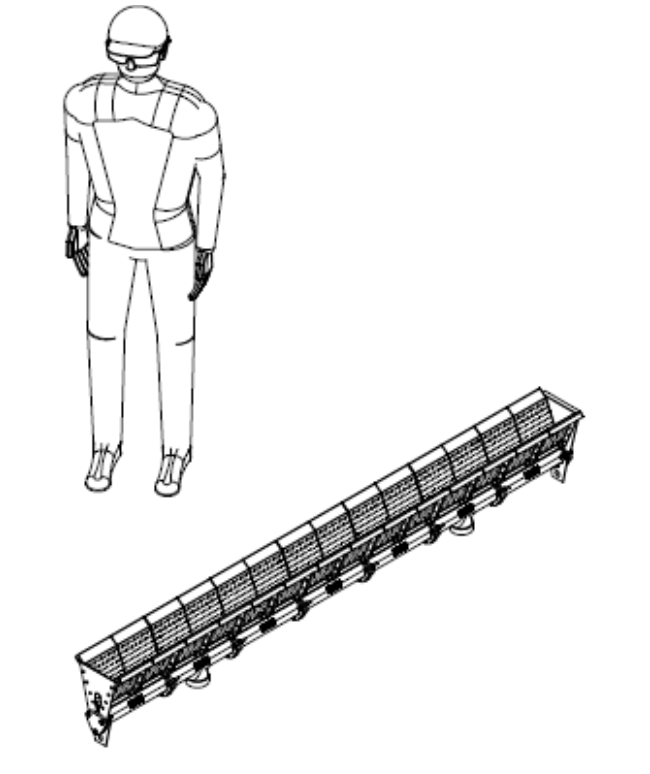 |
1301293 HMA-2A 7.0 Linear Feet 5,250,000 BTU/hr Nominal Capacity |
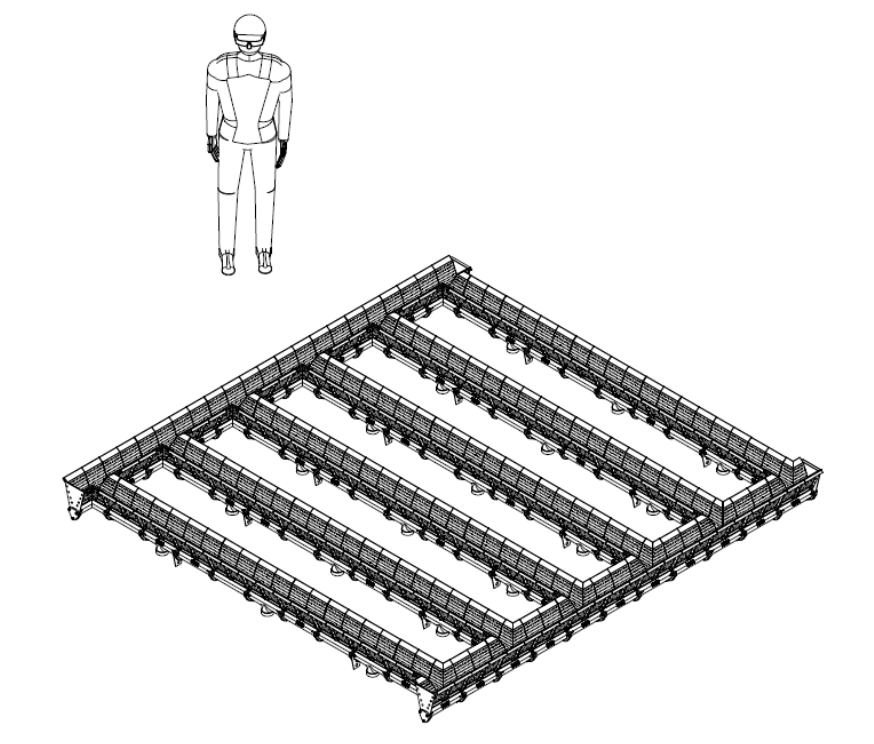 |
1300913 HMA-2A 82.0 Linear Feet 61,500,000 BTU/hr Nominal Capacity |
| Figure 5 – HMA Burner Assembly Examples Description: Showcases HMA burner configurations including their capacities. Person represented for scale. |
|
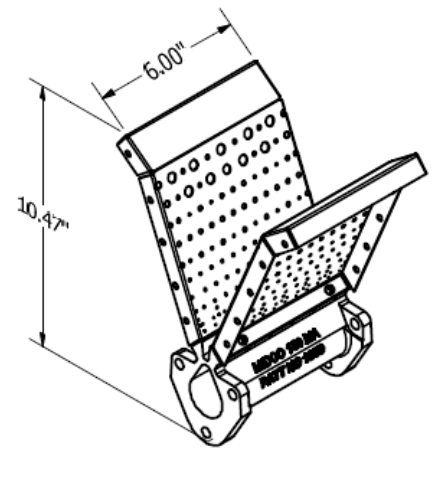
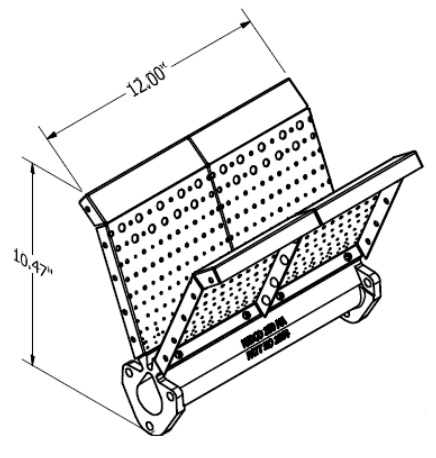
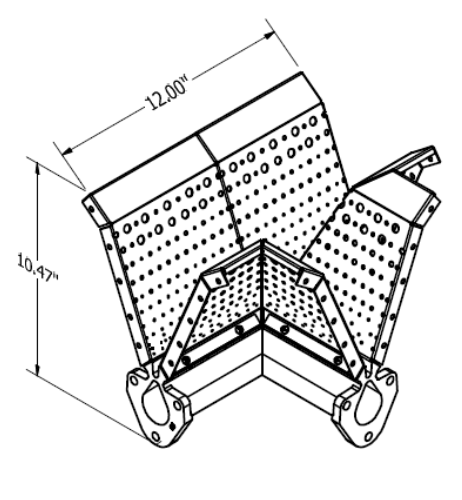
Figure 6 shows the building blocks available for a complete burner assembly. Threaded back inlet options are available for the 6” and 12” straight castings. Threaded side inlet options are available.
 |
 |
 |
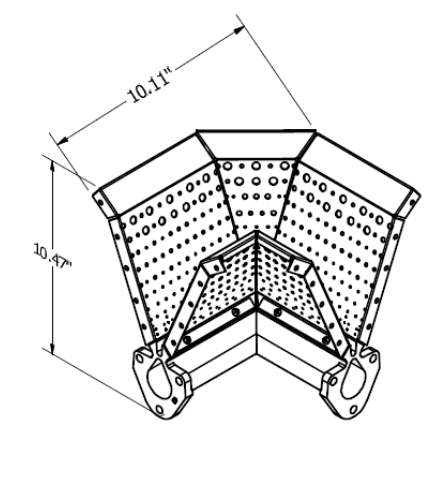 |
| 1050810 HMA-2A 6” Straight – Aluminum | 1010810 HMA-2A 12” Straight – Aluminum | 1080810 HMA-2A Tee – Aluminum | 1070810 HMA-2A Elbow – Aluminum |
| Figure 6 – HMA Burner Assembly Components Description: HMA components come in various sizes. This allows for easy integration into applications. |
|||
 |
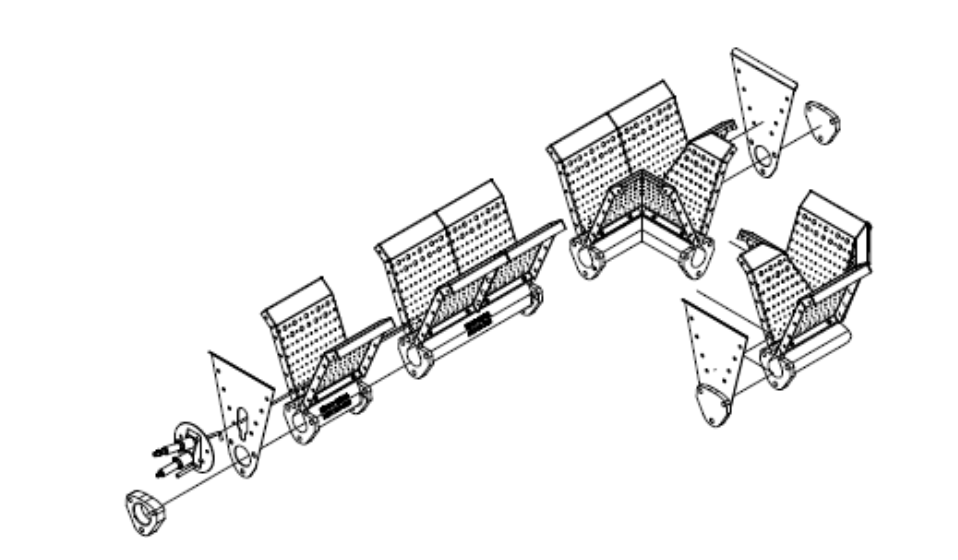 |
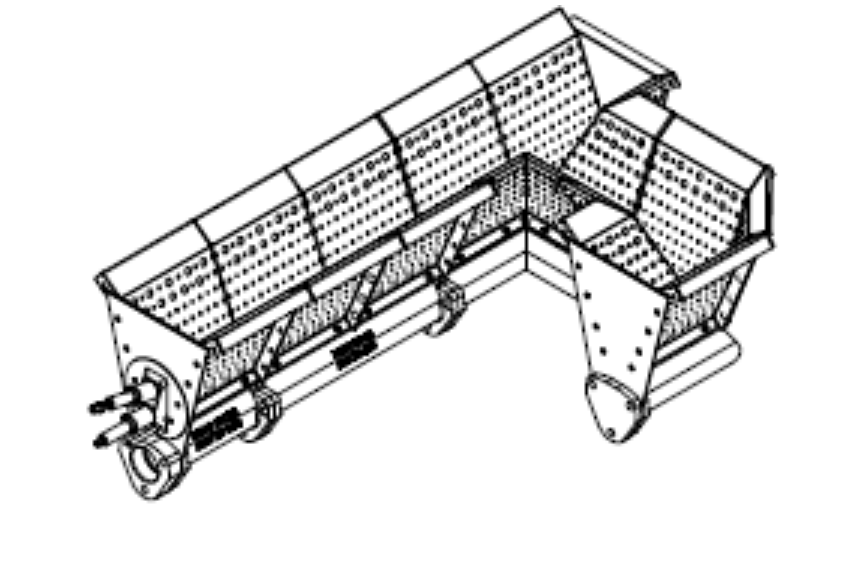
| Figure 7A – HMA Burner Assembly | Figure 7B – HMA Burner Assembly Exploded View |
Description: This shows the flexibility of the HMA burner line and how the burners are assembled. |
|
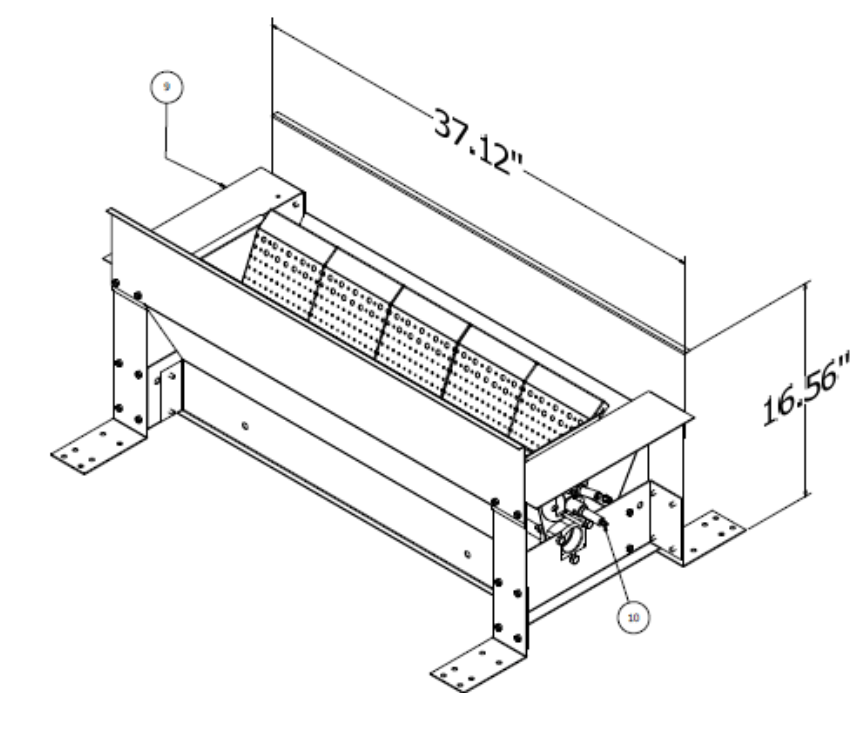
Preconfigured Offerings: Midco offers preconfigured packages tailored to common use cases like spray booths, designed to provide laminar airflow and efficient combustion. The popular 1307000 package includes:
- 2.5 ft HMA burner with mounting feet and air vane rated for 1,500,000 BTU/hr
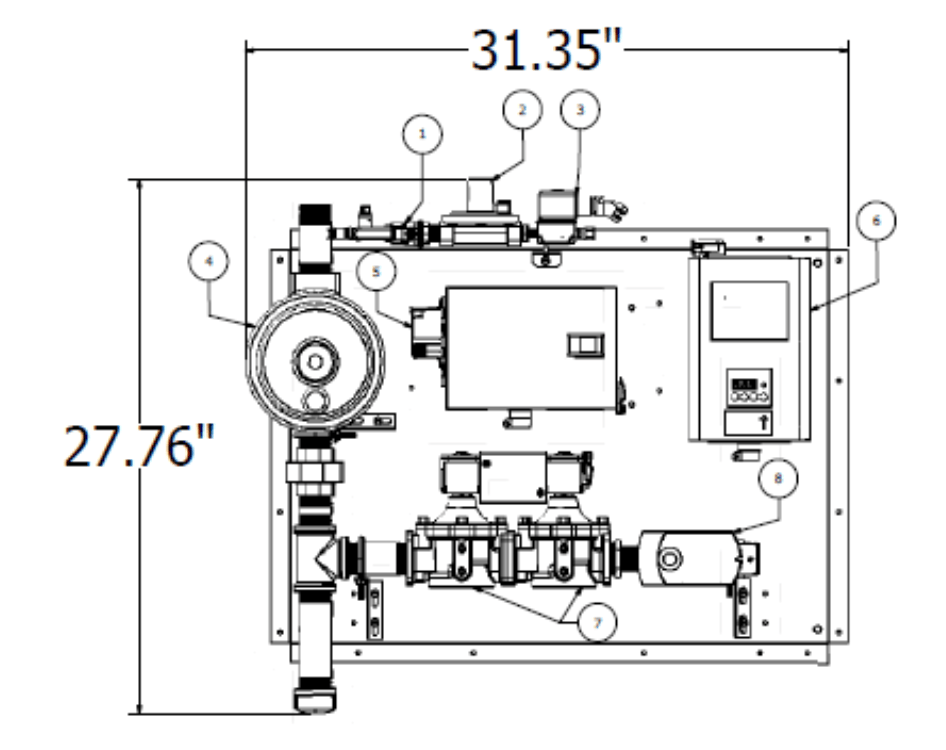
- All-in-one gas train panel
- Required accessories
1307000 is a widely chosen, comprehensive solution in the spray booth industry and can be customized as needed. It features a control system, a sheathed 2.5 ft HMA burner, and all necessary peripherals for easy installation, offering a 30:1 turndown at 1,500,000 BTU/hr. Midco also separately offers honeycombs that help smooth out turbulent air from the blower, further enhancing combustion efficiency and lowering emissions.
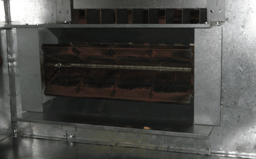 |
| Figure 8 – HMA Burner Insert Description: Common burner for paint booth applications. This particular burner has a rating of 1,500,000 BTU/hr. |
 |
 |
| Figure 9 – Gas Train and Controls Panel Description: Panel mounts the controls and gas train ensuring reliable and safe performance. |
Figure 10 – 2.5 ft HMA Burner Description: Common burner offering popular among our paintbooth customers. |
| Table 1 – Figure 9 & 10 Parts List | ||
| Item | Part No. | Description |
| 1 | 8404-31 | 1/2″ Pilot Train Ball Valve |
| 2 | 8400-07 | 1/2″ Pilot Train Regulator |
| 3 | 8402-50 | 1/8″ Pilot Train Solenoid Valve |
| 4 | 8416-03 | 1-1/4″ Main Regulator |
| 5 | 8447-39 | Ignition Transformer |
| 6 | 8429-69 | Siemens LME71 120V Controller in NEMA 1 Enclosure |
| 7 | 8418-62 | 1-1/4″ Double Solenoid Gas Valve |
| 8 | 8419-94 | Siemens Actuator 44 LB-IN, 90 Sec @ 60 Hz |
| 9 | 1348-00 | HMA-2A 2.5 Foot Burner |
| 10 | 1190850 | HMA-2A Pilot with Spark & Flame Rod |
Controls Designed for Safety: Midco provides reliable control systems for flame detection, using either a flame rod or UV scanner. Depending on the size of the burner, pilot assemblies can function as either direct spark or piloted ignition. The controls also check air and gas pressure, manage gas flow with sequenced solenoid valve opening, and regulate gas through modulation.
Mounting Options: Midco offers several types of mounting brackets such as standard, sheathed burner, and custom designs to accommodate installation needs.
ANSI Testing Service
Midco’s products adhere to an extensive array of standards such as NEMA 54, NFPA 86, FM, and numerous local regulations. We are fully prepared to work closely with you in determining solutions that are precisely aligned with your unique needs.
ANSI Z83.4, Z83.18, and Z83.25 Testing Preparation Services: Midco offers a preparation and testing service to ensure system compliance with ANSI Z83.4, Z83.18, or Z83.25. Our services are designed to optimize airflow, combustion efficiency, and the performance of safety switches. For additional information, please refer to the details below or contact our sales department.
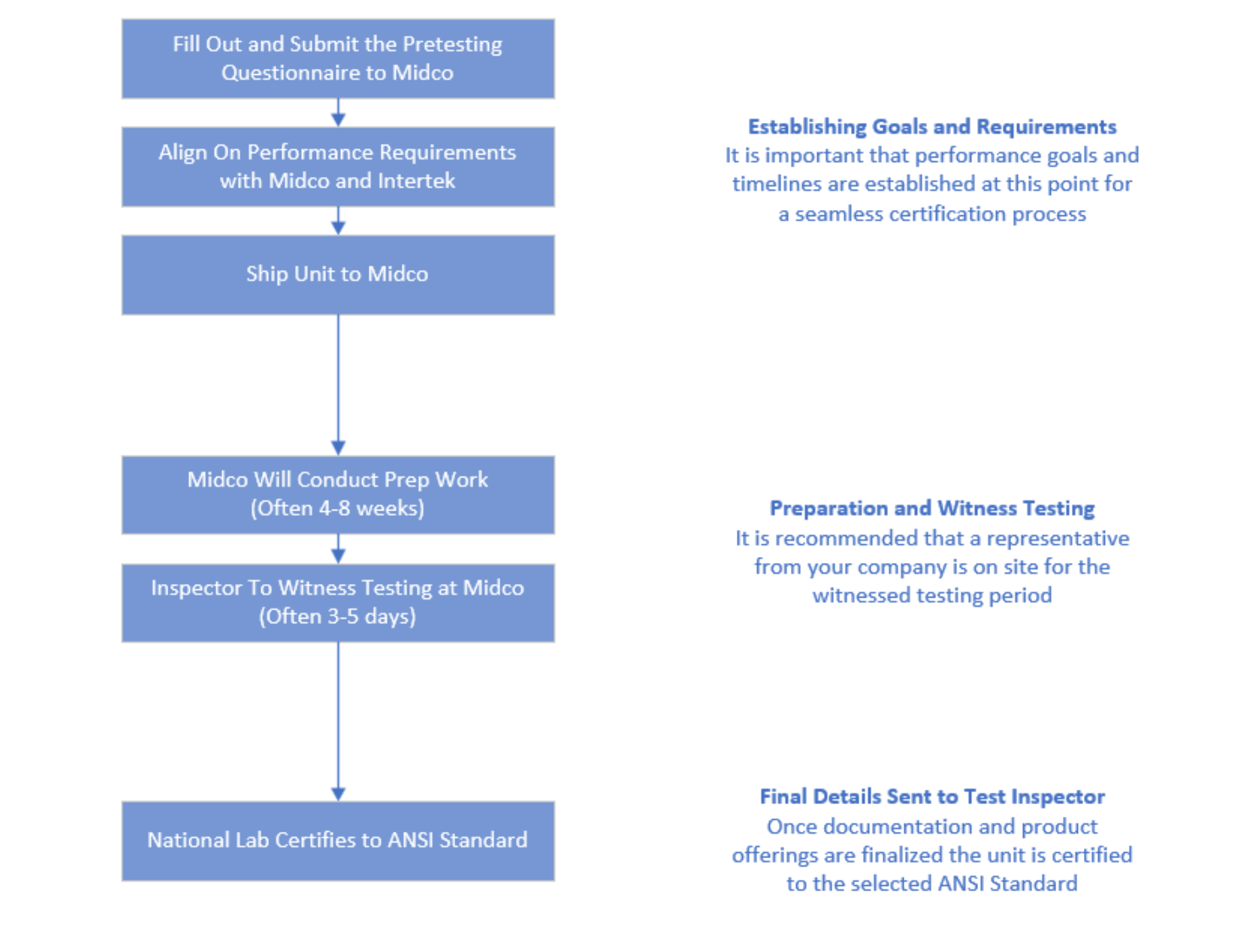 |
| Figure 11 – ANSI Certification Process at Midco International, Inc. Description: This flowchart outlines Midco’s ANSI certification process. This process is largely the same between ANSI Z83.4, Z83.18, and Z83.25, but each situation is unique depending on the unit, number of units being certified, and general performance requirements. |
Typical tests prepared for under the ANSI Z83.25-2017 standard:
5.5 Air Throughput Measurement
5.6 High Temperature Limit Control System
5.7 Air Flow Sensing Systems
5.8 Operating Temperature Control System
5.9 Combustion
5.10 Burner Operating Characteristics
5.11 Piloted Ignition Systems
5.15 Burner and Heater Input Rating Determination
5.16 Manifold and Control Assembly Capacity
5.17 Wall, Floor (Optional), Ceiling, Electrical Equipment, and Wiring Temperatures
5.18 Electrical Continuity and Dielectric Strength
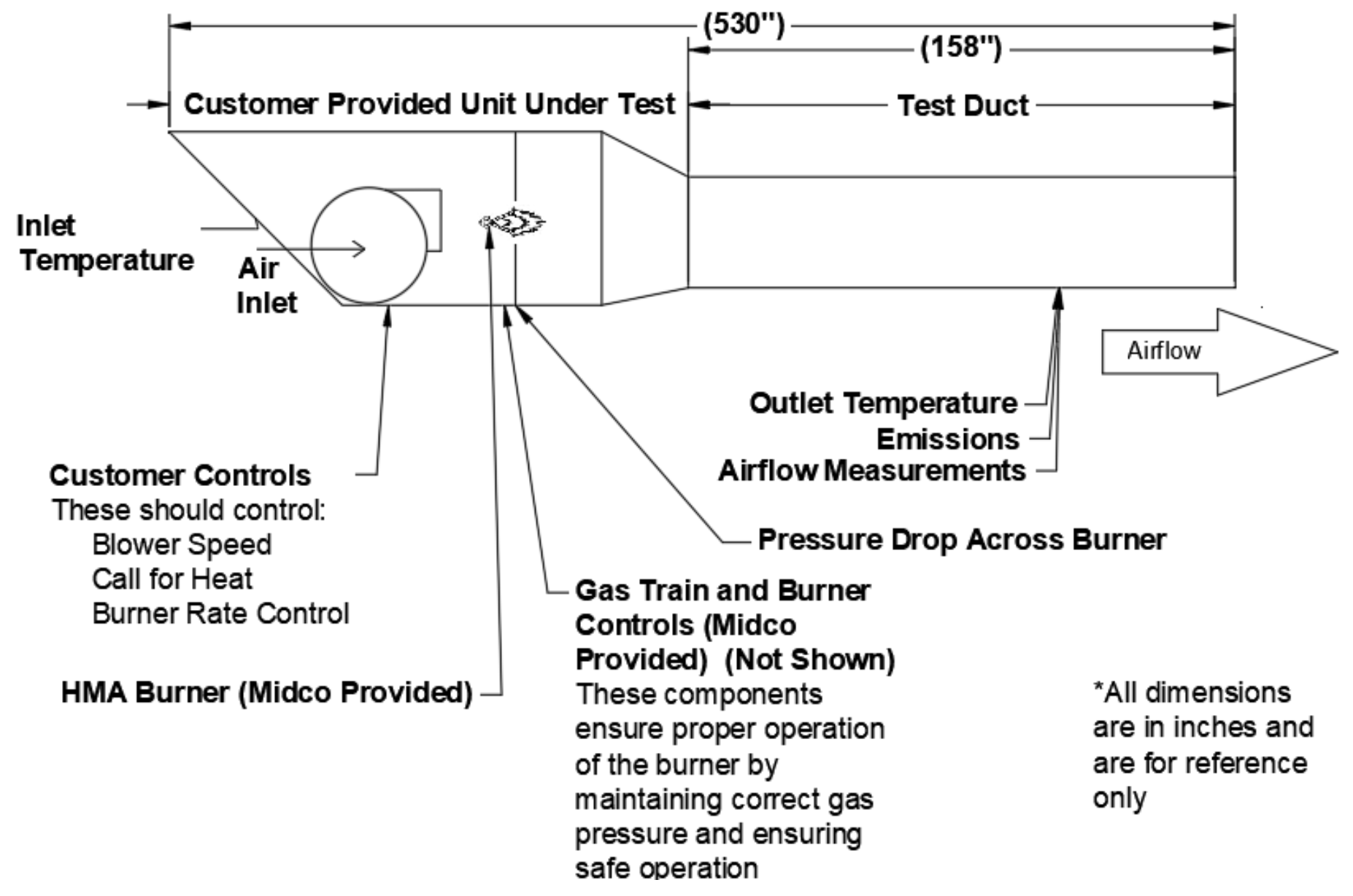 |
| Figure 12 – Example of a Common Unit Certified at Midco International, Inc. Description: Highlights Midco’s ANSI certification testing capabilities, including measurement points for air and gas pressures, airflow, and emission analysis. Our lab is configured to evaluate unit performance and support compliance under various ANSI standards. |
Midco’s test lab is intentionally designed with ANSI certification in mind. Our lab is equipped with Thermofisher IQ Series analyzers to measure NO2 and CO emissions for compliance with the ANSI Z83.4, Z83.18, and Z83.25 standards. Our engineers have a deep understanding of the ANSI standards and can guide you through their nuances to help maximize your unit’s performance. Our HMA series is customizable to suit your requirements, so we can work with you to create a solution no matter your BTU/hr needs or size constraints.
ANSI Z83.4 Non-Recirculating Direct Gas-Fired Heating and Forced Ventilation Appliances for Commercial and Industrial Application (100% Outside Air): The simplest make-up air unit draws air solely from outside, requiring no extra dampers for control.
ANSI Z83.18 Recirculating Direct Gas-Fired Heating and Forced Ventilation Appliances for Commercial and Industrial Applications (Recirculating Make-Up Air): Some make-up air units can recirculate room air and bring in fresh air, typically operating in either 100% outside air mode or 80% recirculated and 20% fresh air mode. These units efficiently handle heating loads using direct-fired heat, but can significantly increase combustion by-products indoors, negatively impacting air quality.
ANSI Z83.25 Direct Gas-Fired Process Air Heaters (Automotive Spray Booth): Automotive spray booths use a specific make-up air unit that can recirculate air. When recirculating, the booth is empty and reaches higher temperatures than other spaces using make-up air units. These units feature an extra high-temperature limit switch.
Click Here for ETL Certification Letter and Request Form
FAQ
What is a make-up air unit (MUA)? A make-up air unit brings in outdoor air to replace air that is exhausted from a building. This helps maintain neutral building pressure, supports indoor air quality, and improves comfort in spaces with significant exhaust (for example, kitchen hoods or process ventilation).
What happens if a building does not have enough make-up air? When exhaust exceeds incoming air, the building can go negative. Common symptoms include drafts, doors that are harder to open, backdrafting risk in some vented appliances, reduced exhaust performance, and indoor air quality issues caused by uncontrolled air infiltration.
What is the difference between direct-fired and indirect-fired make-up air? Direct-fired units add heat by firing directly into the airstream, so combustion by-products mix with the supply air. Indirect-fired units use a heat exchanger to keep combustion by-products separate from the supply air. The best choice depends on the application, indoor air requirements, and whether recirculation is used.
Why are direct-fired make-up air units often chosen for high-airflow applications? Direct-fired systems deliver immediate heat and can be cost-effective to install and operate because they avoid a heat exchanger and its associated pressure drop. They are commonly used where large volumes of outside air must be tempered quickly and where applicable codes and standards allow their use.
What is turndown ratio and why does it matter? Turndown ratio describes how far a burner can modulate down from its maximum firing rate while remaining stable (for example 10:1 or 30:1). Higher turndown can help maintain tighter temperature control during mild weather or varying airflow which can improve comfort and reduce cycling.
Can a make-up air unit be 100% outside air or can it recirculate air? Both designs exist. Many make-up air units operate as 100% outside air systems. Others are recirculating systems that mix return/room air with outdoor air (for example 80/20). Recirculation can reduce heating load, but it may increase indoor exposure to combustion by-products if a direct-fired heater is used and must be evaluated carefully for the specific application.
What do ANSI Z83.4, ANSI Z83.18, and ANSI Z83.25 cover? These standards define requirements for different categories of direct gas-fired equipment. In general, ANSI Z83.4 addresses non-recirculating (100% outside air) direct gas-fired heating and ventilation equipment, ANSI Z83.18 addresses recirculating direct gas-fired heating and ventilation equipment, and ANSI Z83.25 addresses direct gas-fired process air heaters commonly used in applications such as automotive spray booths.
What are common applications for direct-fired make-up air units? Direct-fired make-up air units are frequently used for facilities that need high airflow and fast temperature recovery, including industrial ventilation, process exhaust replacement, agriculture ventilation, and certain process or finishing applications (such as spray booths) when designed and applied to the appropriate standard.
How is a make-up air unit sized? Sizing typically starts with the total exhaust airflow (CFM) that must be replaced, plus any desired building pressurization. Heating capacity depends on required temperature rise (outdoor design conditions to supply air temperature), airflow, and whether the unit is 100% outside air or uses any recirculation.
What does “modular” mean for Midco’s HMA burner line? For OEMs, a modular burner approach allows the burner layout (straight sections, tees, and elbows) to be tailored to cabinet geometry, duct arrangement, and capacity needs. This can simplify packaging in tight spaces and support a wide range of BTU requirements without redesigning the entire platform.
What safety and controls are typically used with direct-fired burners? Direct-fired systems commonly use flame detection (such as flame rod or UV scanner), air-proving and gas-pressure switches, and properly sequenced valve operation during light-off. Modulating control is often used to maintain supply air temperature while airflow and outdoor conditions change.